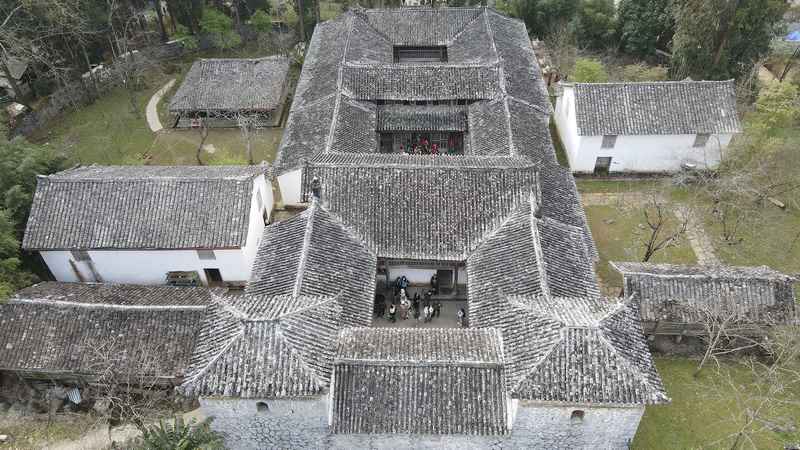
Nestled in the Sa Phin Valley, Lung Phin Commune, Dong Van District, Ha Giang Province, King Meo’s Palace – also known as the Vuong Family Residence – is about 125km from the city center and just 15km from the Dong Van Karst Plateau. This structure is closely tied to the lives of two H’Mong father and son: King Meo Vuong Chinh Duc (1886-1962) – the feudal lord of the H’Mong people, revered as King Meo – and his son, Vuong Chi Sinh (or Vuong Chi Thanh), who followed the revolutionary path and was a delegate to the first two National Assemblies.
Construction History and Heritage Value
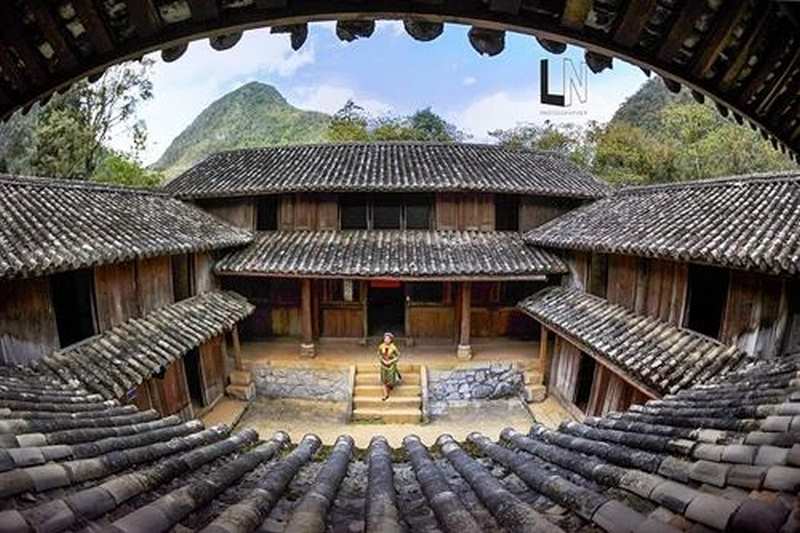
Construction of the palace began in 1898 and was completed after nine years in 1907, at an enormous cost of 150,000 French Indochinese piastres – equivalent to about 150 billion VND today. Carried out by artisans from Yunnan (China) in collaboration with H’Mong locals, the structure spans over 1,200m² on a 3,000m² plot of land. Due to its profound historical and cultural value, it was recognized as a National Heritage Site by the Ministry of Culture, Sports and Tourism in 1993, after nearly a century of existence. The entire construction process took five years, entirely by human labor without any machinery.
Situated at the foot of a valley surrounded by highland terrain, the palace utilizes the “turtle shell” landscape – curved mountain ranges resembling a turtle shell – for effective defense during wartime. Even after over a century, everything inside remains intact, sparking curiosity for every visitor to explore at least once.
Unique and Harmonious Architecture King Meo’s Palace
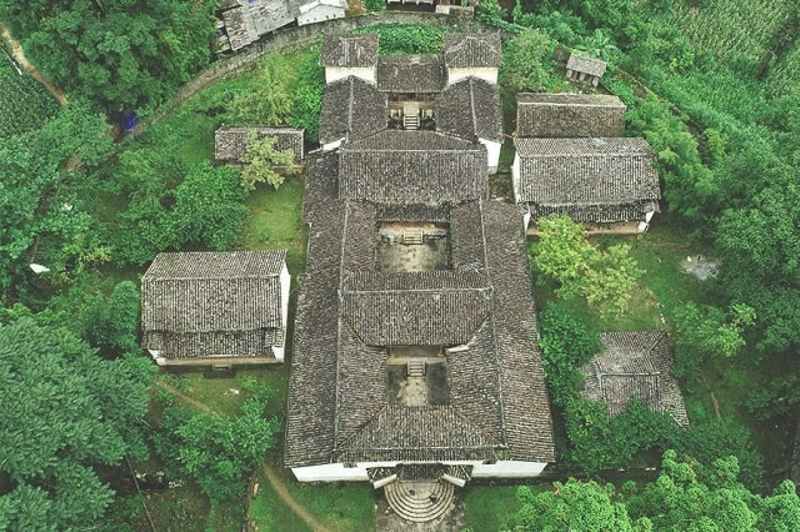
The palace’s architecture is a masterful blend of three cultures: H’Mong, French, and Chinese. The complex consists of four horizontal houses and six vertical ones, divided into three areas: the front palace (for guards and servants), the middle palace, and the rear palace (for living and working), with a total of 64 small rooms across two floors. To ensure durability, builders used green stone for walls, wood for roof frames and pillars, and terracotta for roof tiles. To this day, it remains one of the rare structures that fully serves residential, working, and defensive purposes.
Despite the diverse influences, the overall design flows gracefully and harmoniously like a unified whole, without any forced elements. Spanning a vast 3,000m² area, the palace exudes the simplicity and rusticity of folk architecture, following the principle of “higher outside, lower inside” to blend perfectly with the surrounding nature.
Exquisite Interiors and Details
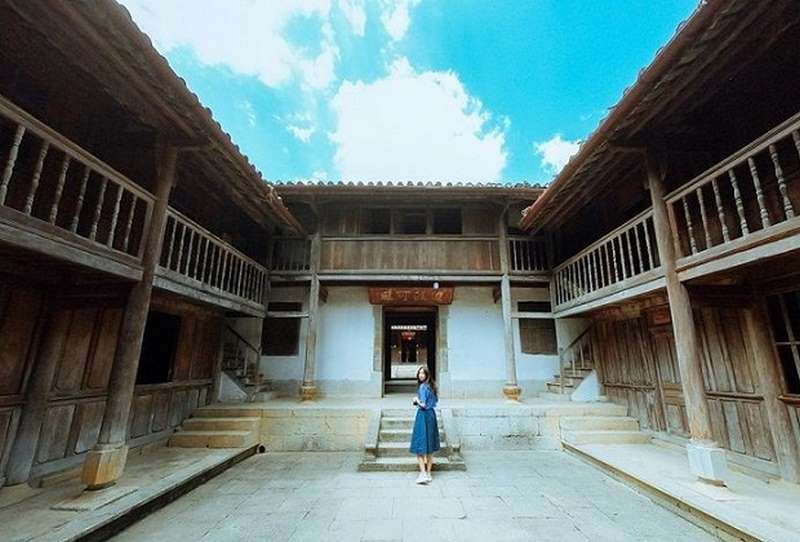
Most of the furniture and items associated with King Meo are preserved intact to this day. Some original pine wood chairs were later replaced with ironwood and ironbark to prevent deterioration over time. The wooden carvings feature local motifs like peach blossoms and poppies; house pillars shaped like opium pods – the crop that helped King Meo amass wealth for construction. Western influences are evident in the goat’s milk stone bathtub, glass windows beside the fireplace, and French-style granite entrance with iron frames.
Mysterious Legends
Besides the impressive architecture, the palace holds many stories passed down from its construction to the present.
Legend has it that King Meo Vuong Chinh Duc’s old residence was in the mountain foothills near a deep ravine, deemed unsuitable for feng shui by his subordinates. He invited a Chinese geomancer, Zhang Zhao, to assess it. After careful consideration, the master selected Sa Phin for its “turtle back” terrain – a turtle-shaped hill bringing wealth and gathering heroes.
Another anecdote revolves around his son Vuong Chi Sinh: The Vuong family was cursed by a Han feng shui master, nearly leading to extinction. King Meo suffered chronic back pain, untreatable by many healers. The Han master claimed the father’s grave was on a “dragon’s back,” incurring heavenly punishment, and advised relocation. Unbeknownst to them, it was a deception, causing the first wives to bear no sons. Only the fourth wife gave birth to Vuong Duy Tho.
Exploration Guide and Combination Suggestions
King Meo’s Palace is an attractive destination amid Ha Giang’s wild mountains, forests, and poetic landscapes. Visit to reminisce about the past and pay tribute to King Meo’s contributions against foreign invaders. Combine with nearby sites like Pao’s House, Suong La Valley, and Lung Cu Flagpole for a more diverse and cost-effective journey.
The Vuong Family Residence is not just an architectural marvel but a vivid testament to the history and culture of the highlands. If you have the chance to visit Ha Giang, don’t miss the opportunity to explore this place and feel the mystery and uniqueness of the borderland.