Ha Giang – the land at the northern tip of the Fatherland – is famous for its spectacular mountain passes, and Deo Ma Pi Leng is the “king” among them, one of the “four great peaks” of northern Vietnam’s mountains, on par with O Quy Ho, Khau Pha, and Pha Din. With a length of about 20km winding through sheer cliffs over 1,000m high, the pass offers a challenging conquest journey but also an unforgettable majestic natural painting, where the Nho Que River winds like a silk ribbon below the deep abyss. Recognized as a National Scenic Site in 2009, Deo Ma Pi Leng is not just a transportation route but also a symbol of human will, attracting thousands of backpackers and tourists each year. In 2025, with further road repairs, the pass continues to be a “must-go” destination for adventure lovers. Let’s explore the details to plan this emotional trip!
Introduction to Deo Ma Pi Leng
Deo Ma Pi Leng is located on National Highway 4C (also known as Happiness Road), in Pa Vi – Pai Lung Commune, Dong Van and Meo Vac Districts, Ha Giang Province, about 100km north of Ha Giang city. The exact coordinates are 23°14′27″N 105°24′39″E, with the pass summit at about 1,200 – 1,600m above sea level, part of the Dong Van Karst Plateau – UNESCO Global Geopark. One side is sheer cliffs, the other is the deep Tu San abyss with the Nho Que River dividing it, creating a unique “geological monument” landscape from hundreds of millions of years ago.
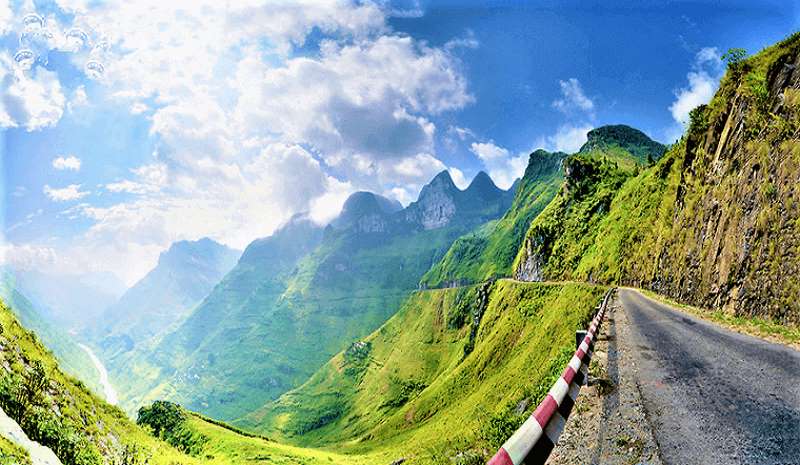
The Heroic History of Deo Ma Pi Leng
The name “Ma Pi Leng” comes from the H’Mong language, meaning “horse’s nose bridge” (Ma Pi Leng), changed to “Ma” for easier pronunciation when opening the road. Before 1959, locals only crossed the pass via rope-hanging trails over 9 dangerous turns. The French surveyed in 1900 but failed due to the harsh terrain. On March 29, 1959, the Viet Bac Party Committee decided to open the Ha Giang – Dong Van – Meo Vac route to develop remote areas, based on the proposal of Mr. Pham Dinh Di (Head of Ha Giang Transport Department).
Construction started on September 10, 1959, and completed on June 15, 1965, after 6 years with over 1,300 youth volunteers and 1,000 civilian workers from 16 ethnic groups and 8 northern provinces, totaling 2,946,321 workdays to manually excavate over 2.8 million cubic meters of rock. The pass section was done by the “Co Dung” (suicide) team, with 17 youths hanging on the cliff for 11 months to open an initial 40cm-wide path. The process involved many sacrifices: brother Dao Ngoc Pham fell into the abyss saving comrades, brother Luong Quoc Chanh died from illness, and attacks by bandits from late 1959. In Pai Lung Commune, there is a Memorial Stele for Youth Volunteers to honor them. The pass was ranked as a National Heritage Site in 2009, including the summit and Tu San abyss. In 2019, the Panorama restaurant was partially demolished for illegal construction affecting the landscape – a lesson in heritage protection.
Outstanding Features and Natural Beauty
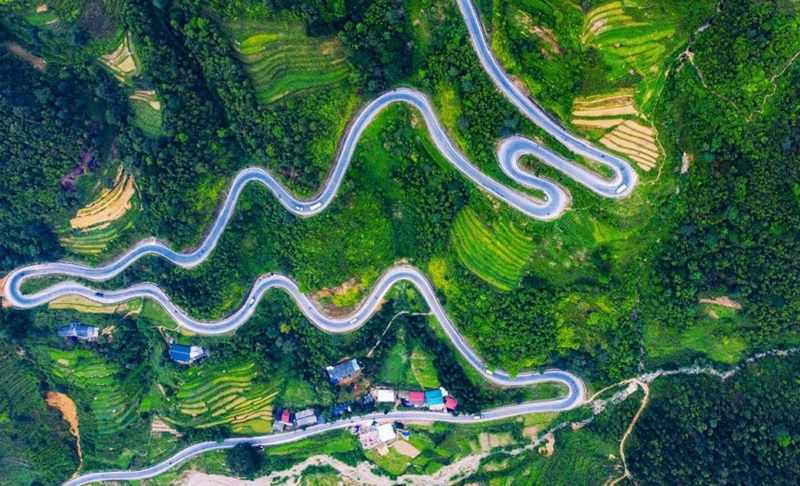
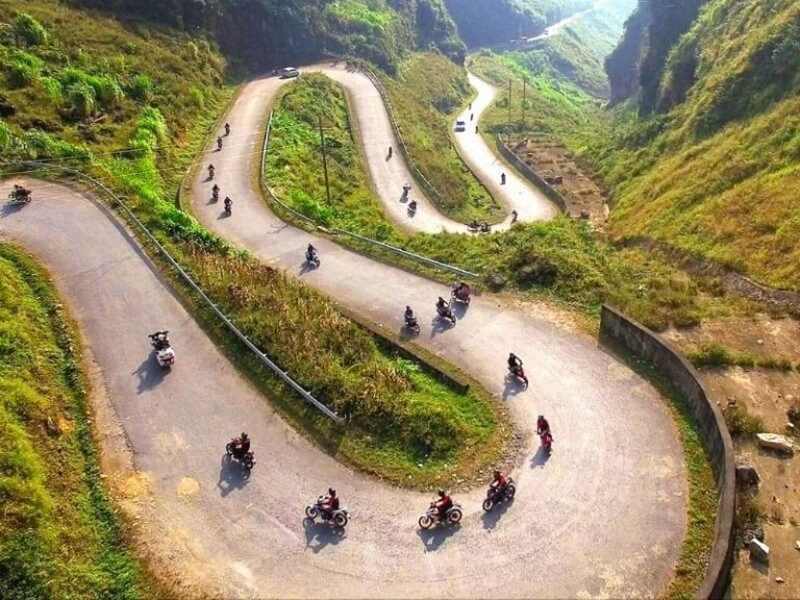
The 20km pass has 9 treacherous turns, hugging cliffs up to 1,600m high, likened to a “white snake” winding through green forests, with narrow, rocky surfaces and “hairpin” curves that are “chilling.” From the summit, the panoramic view encompasses the Tu San abyss – a unique tectonic valley – and the Nho Que River like a turquoise thread below the deep chasm. The geological area includes 426-million-year-old silicified limestone fossils, fault lines forming mountains, and rugged karst plateaus in the North – Northeast. The pass is one of the “four great peaks” due to its extreme difficulty, challenging driving skills but rewarding with majestic views: golden terraced rice fields in harvest season (September), buckwheat flowers blanketing the sky (October-November), or fog-shrouded in winter. The summit has a rest stop for sightseeing.
Unmissable Activities at Deo Ma Pi Leng
Deo Ma Pi Leng is not just a transportation route but an adventure paradise, where you can challenge yourself with harsh terrain, immerse in majestic nature, and explore profound historical values. With an average elevation of 1,200m and sheer limestone cliffs hundreds of meters high, the pass offers diverse activities suitable for backpackers, families, or photography lovers. Below are the most outstanding experiences, updated for 2025 with new amenities like improved trekking paths and safer boat tours.
1. Conquer the Pass by Motorbike, Car, or Trekking
The backpacking journey through the 20km pass with over 9 spectacular hairpin turns is a “supreme test” of driving skills, where you feel the mountain wind whistling past your ears, white clouds drifting close to the vehicle, and adrenaline surging with each sheer cliff overcome. For backpackers, start from Dong Van or Meo Vac early morning to avoid peak hours, keep speed under 40km/h, and stop at panoramic points to admire the deep Tu San abyss – a unique geological tectonic valley from millions of years ago. If driving a car, choose high-ground-clearance vehicles to handle the rocky terrain.
Especially, trekking the pass on foot has become a hot activity with the new 5-7km trail from Pa Vi to Sin Cai, taking 3-4 hours, leading through winding hillsides and lush pine forests, ending with a sparkling view of the Nho Que River under the sun. Guided trekking tours (price 500,000 VND/person, including water and insurance) suit small groups, helping you learn about the karst ecosystem and take “virtual” photos at sheer rock outcrops. Note: Wear sturdy hiking shoes, gloves, and check weather to avoid landslides – this experience not only challenges fitness but also awakens pride in the legendary “Happiness Road.”
2. Admire and Explore the Nho Que River by Kayak or Cruise
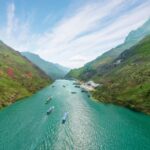
One of the “unmissable” highlights is the Nho Que River – a 40km turquoise river winding through the Tu San abyss like a silk ribbon between towering cliffs, where crystal-clear water reflects karst rocks and the suspended Nho Que hanging bridge like a rainbow arc. From the pass summit, stop at the viewpoint station then rent a kayak (150,000 – 200,000 VND/ride, 1-2 hours) to paddle along the river, feeling the cool water lapping the hull, the roar of small waterfalls echoing from ancient caves, and winds carrying wildflower scents from the abyss banks. This activity is especially appealing in summer (June-August), when river levels rise, offering chances to explore hidden karst caves along the banks – part of the Dong Van UNESCO Geopark.
More modern cruises with comfortable seating and guides telling historical stories (price 300,000 VND/person, departing from Pai Lung dock) will glide you through the twists, where you can picnic on board with local corn cakes and capture close-ups of red alluvial soil from the mountains. This is ideal for families or couples, providing relaxation after the tiring pass journey, but remember to wear life jackets and avoid rainy season due to strong currents.
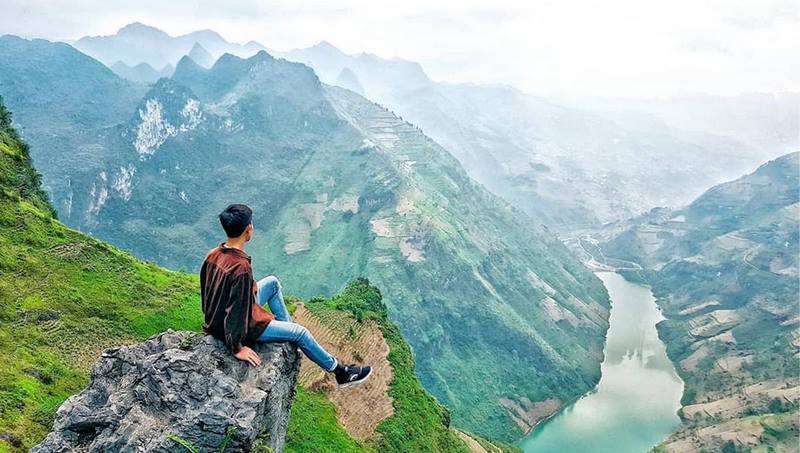
3. Visit Historical and Cultural Sites at Nearby Relics
Deo Ma Pi Leng is not only beautiful but rich in historical value, and visiting the relics will help you understand human will more deeply. Start at the Youth Volunteers Memorial Stele in Pai Lung Commune – a stone structure engraved with the names of 17 heroes who sacrificed during the 6-year road opening (1959-1965), where you can stand silently before the stele, breathe the solemn air, and read touching stories about the “Co Dung” team hanging on cliffs to excavate over 2.8 million cubic meters of rock manually. Free entry, open 24/7, and in 2025, there’s added audio guide via QR code to hear stories from living witnesses.
Combine with cultural exploration by visiting H’Mong villages like Pa Vi or Sin Cai at the pass foot, where you can homestay (300,000 VND/night) to enjoy thang co – spicy herbal beef offal hotpot – by the campfire, learn brocade weaving from locals, and listen to ethnic leaf flute songs under the full moon. A new highlight is the “Lonely Tree” – a solitary pine amid the pass, symbolizing loneliness but resilience, becoming a hot check-in spot with full abyss views; try sitting under the canopy, sipping corn leaf wine (20,000 VND/glass) to feel the mountain forest breath. This activity is highly educational, connecting you to ethnic identity and resistance history, but respect the space by not littering.
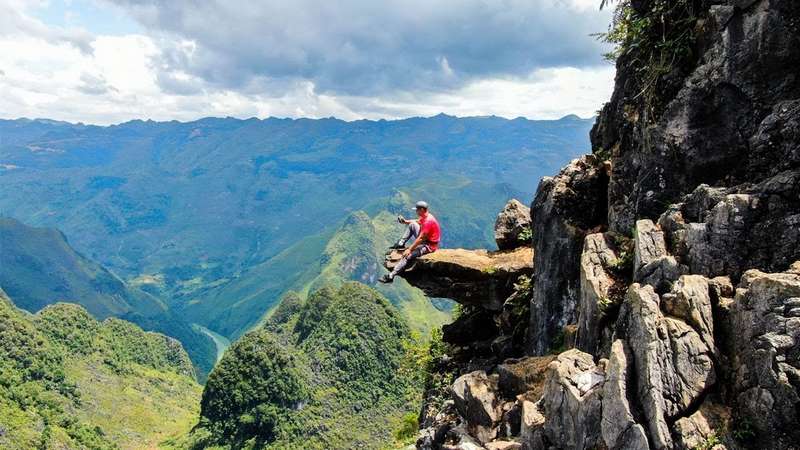
4. “Virtual” Check-In and Seasonal Experiences
Deo Ma Pi Leng is a “paradise” for photography enthusiasts, with countless “million-like” angles changing by season, from dawn tinting the cliffs pink to sunset reddening the Nho Que River. Spend 1-2 hours wandering the sheer rock outcrops at the summit (1,600m high), using a drone (if permitted) to film 360-degree panoramas of the Tu San abyss – where clouds and sky blend like a fairyland. The most famous spot is the Lonely Tree, where you can pose “alone amid the mountains and forests” with a sheer cliff background, or at the Nho Que Bridge for “flying” photos on the suspension cables.
By season, experiences become even more magical: Spring (January-March) admires blooming plum and peach flowers blanketing the pass road; autumn (September-November) peaks with golden ripe rice on Hoang Su Phi terraced fields and pure white buckwheat flowers along the mountainsides – ideal for the November Buckwheat Flower Festival; winter for hunting drifting clouds and rare snowfall, creating a “mini-Tibet” scene. Hire a professional photographer (200,000 VND/hour) for pro shots. Safety note: Don’t climb to cliff edges casually, and bring a power bank as mobile signal is weak. This is the most relaxing activity, turning the journey into an unforgettable memory album.
Ideal Visiting Time
The best time is September – November, when rice ripens golden and buckwheat flowers bloom, creating a romantic “golden road.” Early morning (5-8am) is ideal for peak cloud hunting, with thick fog and sun filtering through rocks. Spring (February-April) for peach flowers, summer-autumn for sunflowers. Avoid rainy season (June-August) due to landslides. In 2025, the November Buckwheat Flower Festival will boost appeal.
Notes When Exploring Deo Ma Pi Leng
- Traffic Safety: Keep speed under 40km/h, check brakes beforehand; travel in groups, rotate drivers for long backpacking. Bring repair tools (1.5l gas can, tire patches).
- Weather and Health: Bring warm clothes, gloves (5-15°C), cold medicine, wind oil; drink plenty of water, avoid altitude sickness.
- Gear: Long-sleeved clothes against insects, light snacks, power bank. No littering, respect UNESCO heritage.
- Others: Get border pass; free entry, but river boat 150,000 VND. In 2025, roads repaired but still narrow – avoid weekend peaks.
Deo Ma Pi Leng is not just a pass but a symbol of resilience, where heroic history blends with majestic natural beauty, awakening national pride in every visitor. From thrilling turns to vast river-mountain views, the conquest journey will be an unforgettable memory. Combine with Dong Van Ancient Town or Lung Cu Flagpole for a fuller Ha Giang trip. If planning, don’t hesitate – the “King of Passes” awaits! Wishing you safe, inspiring adventure moments.